
Industries
Heating and cooling processes
Concrete applications to optimize your thermal processes
Heating and cooling are involved in a wide variety of industrial processes. Whether it involves heating a part, maintaining a uniform temperature, or improving the cooling of equipment, each application has its own performance, quality, and energy consumption constraints.
Throughout its projects, SIMTEC has developed numerical models to support industrial companies in the analysis and optimization of numerous thermal processes.
Industrial heating applications
Our work includes in particular:
- Thermal management of large spaces, with optimization of the positioning of heat generators to limit energy losses.
- Industrial furnaces, by studying the spatial distribution of temperature to reduce thermal gradients within the parts being heated.
- Tube bundles, by analyzing heat transfer through natural convection and radiation.
- Induction heating, with the calculation of the power transferred and the flow of induced currents.
- Gas burners and boilers, in order to optimize their geometry and improve their efficiency.
- Drying processes, using quantitative measurements of the power transferred to varnishes and paints.
- High-voltage cables, by studying the natural convection induced by heating due to the Joule effect.
Industrial cooling applications
We also work on a wide range of cooling-related challenges:
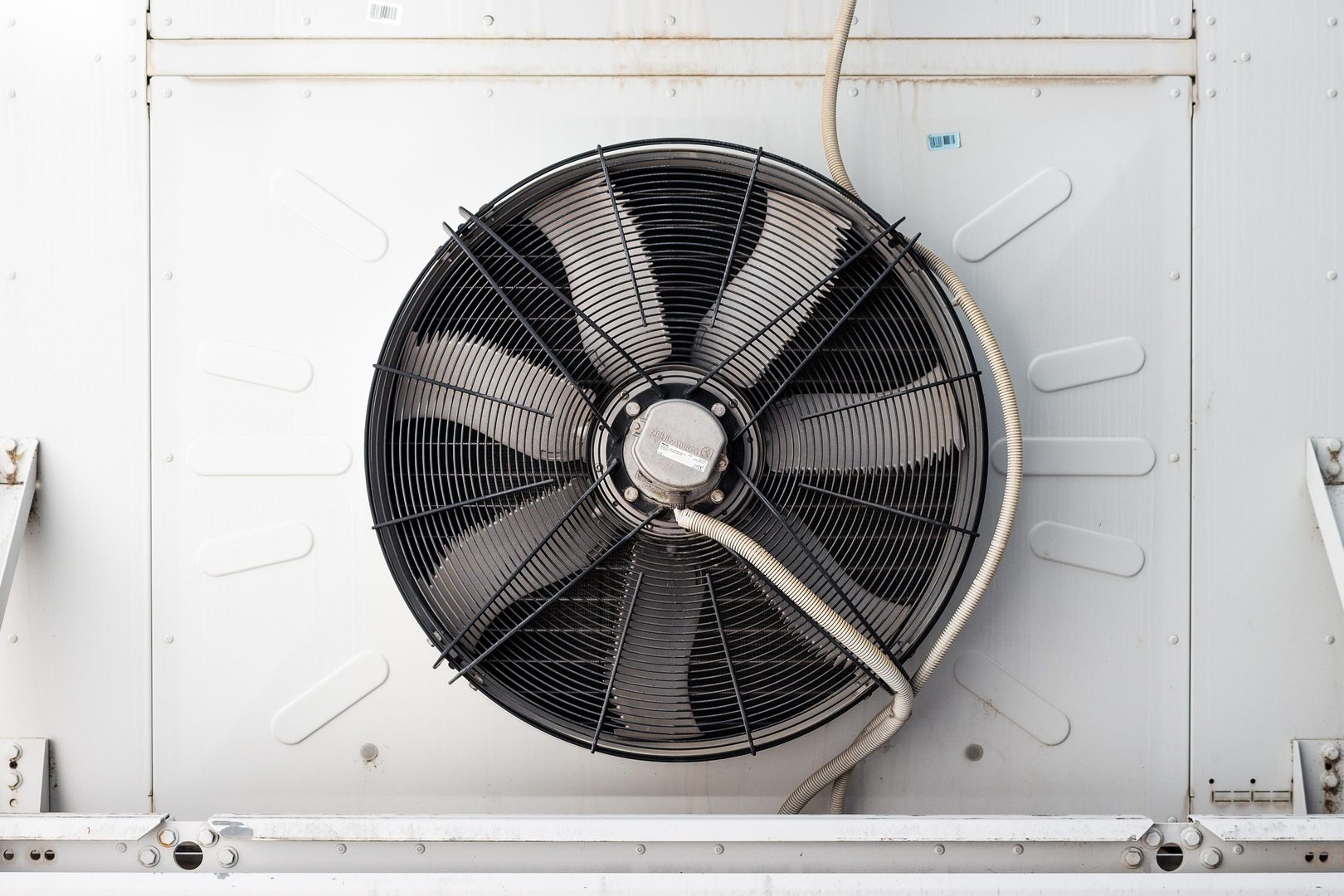
- Refrigeration and air conditioning of large spaces, with optimization of the positioning of cooling generators to reduce energy consumption.
- Processes involving phase changes in liquid, solid, or vapor form.
- Forced convection optimization to improve the performance of cooling systems.
- Refrigeration equipment for laboratories, in order to achieve a uniform temperature within thermal chambers.
- Cooling of electronic boards and LEDs, particularly through optimization of copper routing and heat dissipation.
Energy performance and temperature control
Depending on the application, the objectives can be very different:
- improving temperature uniformity;
- reducing thermal gradients;
- reducing energy consumption;
- increasing equipment efficiency;
- reducing heating or cooling times;
- improving product quality;
- extending the service life of components.
Each study is tailored to the specific constraints of the process in order to identify the most effective solutions before the experimental validation phase.
Each thermal process has its own specific constraints. SIMTEC develops studies tailored to your equipment in order to improve its performance, efficiency, and energy efficiency.